
☕ Coffee with Walnut Milk, Please!
I have drunk milk my whole life. I could almost say that dairy is part of my identity. But that has changed.
Over the years I started learning more about what conventional cow's milk can actually do to the body. Some research links A1 cow's milk to inflammation, digestive issues and certain health conditions, especially in people who are sensitive to it. I'm not saying milk is bad for everyone. But it made me stop and think. And honestly, I think my body always knew. I don't feel as bloated anymore.
I no longer drink milk, not even in my coffee. Half a year ago I couldn't imagine black coffee at all. I had tasted it by accident as a child, thinking it was cocoa, and that taste of disappointment stayed with me every time I tried drinking it black.
I learned to drink coffee at 15, when a friend bought me a coffee that was half milk. It tasted wonderfully good and from that moment on I always drank coffee with a big splash of milk.
You have probably heard someone say that since we are not calves, we shouldn't be drinking cow's milk. I always fought against that idea because my coffee simply didn't taste good without it. I still don't love black coffee, but I enjoy having it now after adding homemade walnut milk and a few spices.

I have tried all kinds of milk alternatives.
Coconut milk felt too watery to me and hemp milk was very thin too. I like oat milk the most in terms of flavor, but both oat milk and almond milk contain a lot of emulsifiers. Many plant milks also have added sweeteners. Oat milk has a high glycemic index too, as the manufacturing process converts the oat starch into fast-absorbing sugars. And almond farming uses a huge amount of water, making it a poor choice environmentally.
Eventually my daughter and I discovered pistachio milk and macadamia milk, which tasted good and felt richer. But then my daughter suggested we make our own nut milk at home.
We didn't want to make cashew milk because it contains a lot of lectins. We tried pecan milk first but it tasted too watery. Then we tried walnut milk and it was just right. Slightly sweet and nicely thick. We have been making this for a while now and we are really happy with it. Here is how to make it:
Walnut Milk
Ingredients:
1 cup walnuts
¼ tsp salt
water
Equipment:
bowl
strainer
cheesecloth
blender
bottle and funnel
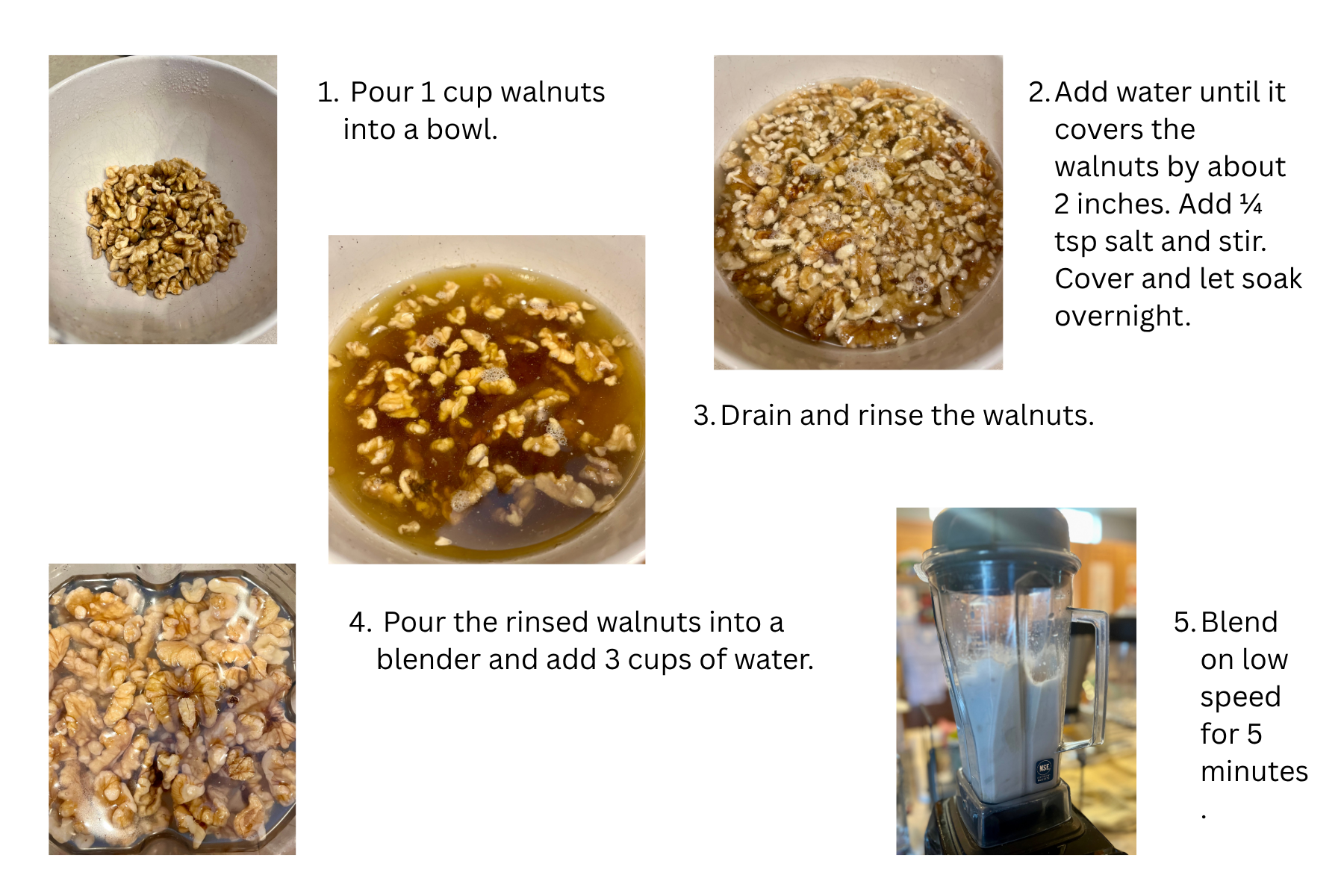
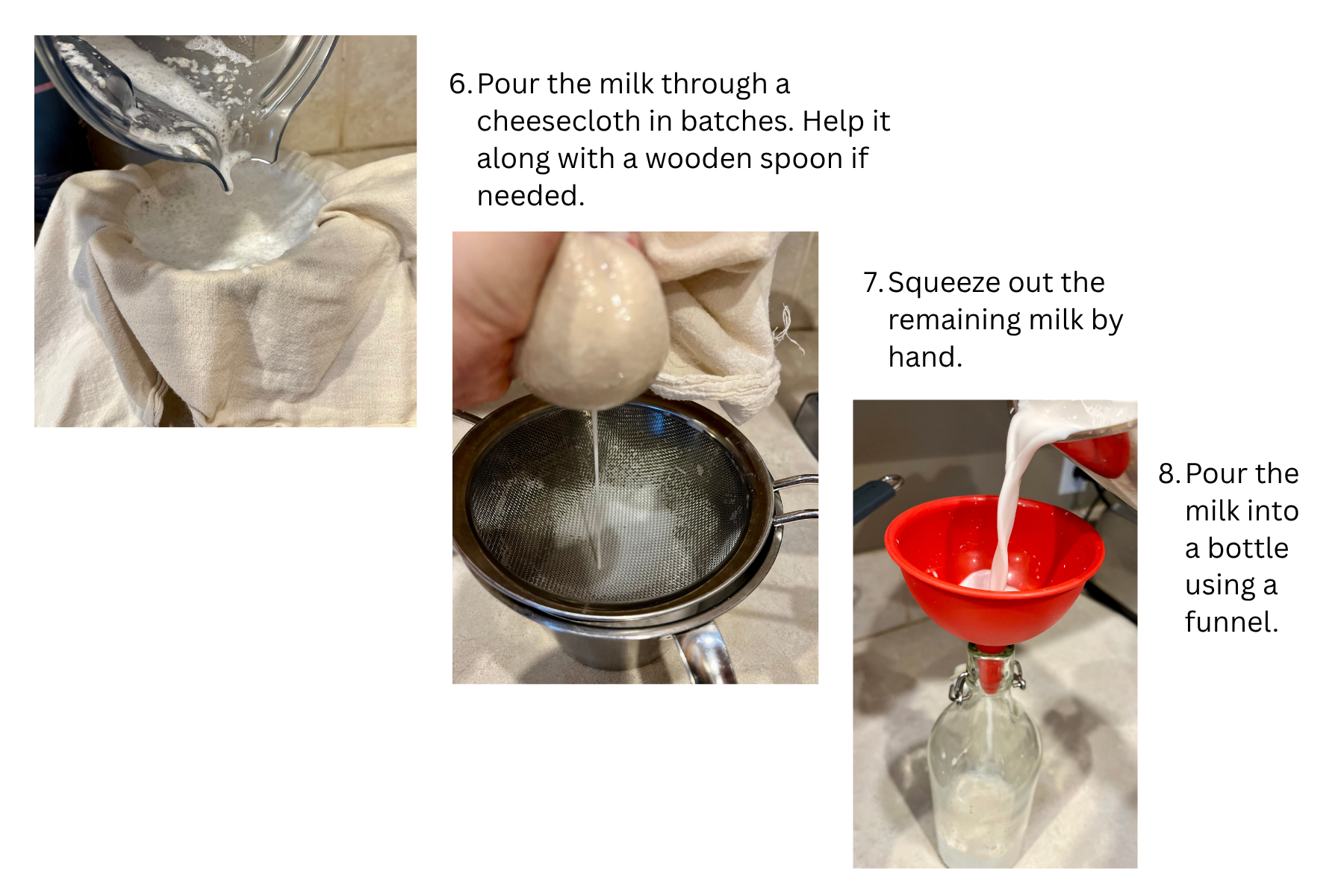
Walnut milk keeps well in the fridge for 3–4 days.
You can use the leftover pulp in oatmeal or baking. I use it myself to make crackers or muffins. If you feel you are left with too much pulp, blend for a few more seconds on higher speed at the end so the pulp breaks up more.
Walnut pulp keeps in the fridge for 3-4 days, so it's better to store it in the freezer and use a larger batch at once, for example when making Walnut Pulp Crackers.
You can use this same method with other nuts too.
What I Add to My Coffee — Spices and Add-ins With Real Benefits
I have never really liked the taste of sugar in my coffee, but I do like to add other flavors. Here is what I use:
Ceylon cinnamon:
Balances blood sugar and may reduce the risk of type 2 diabetes over time
Supports digestion and reduces inflammation
A better choice for daily use than regular cassia cinnamon — it doesn't contain coumarin, which can strain the liver
MCT oil:
Provides quick energy without a blood sugar spike, it's absorbed directly by the liver
Supports brain function and helps keep you full longer — a great choice especially in the morning
Start with a small amount, about one teaspoon, too much at once can cause digestive discomfort
When brewing my coffee I also add a small amount of either cloves or cardamom directly into the coffee grounds. You can use these together or separately. Cinnamon and cardamom are a gentle combination. Cloves are stronger and work best in small amounts. All three together remind me of a spiced chai coffee.
Cloves:
Rich in antioxidants and eugenol, which has shown promising results in inhibiting cancer cell growth in laboratory studies
Also supports blood sugar management and digestion
Use in small amounts — the flavor is strong
Cardamom:
Supports digestion and reduces bloating
Contains antioxidants and has a calming effect on the nervous system
Traditionally used to ease nausea and stomach discomfort and it makes coffee wonderfully aromatic
Coffee and milk belong together in my opinion, but the milk in your coffee doesn't have to be cow's milk, and coffee can be flavored in so many ways while getting health benefits at the same time.
Which nut milks and spices do you like in your coffee? Let me know in the comments below!
Did you know?
Mushroom coffee has become a popular wellness trend in recent years. Adaptogenic mushrooms like lion's mane, reishi and chaga are added to coffee as a powder or extract. Lion's mane supports brain function and focus, reishi helps with stress management and sleep, and chaga is packed with antioxidants. You can find these at health food stores or online. I personally enjoy Ryze mushroom coffee, but I keep it to just one cup a day.

Want to keep this recipe handy? Download my free walnut milk printable. Just click the button below and enter your email.
“One cannot think well, love well, sleep well, if one has not dined well.”
〰️
“One cannot think well, love well, sleep well, if one has not dined well.” 〰️

See my other Nutrition articles here:

Got a bag of walnut pulp sitting in your freezer from making walnut milk? Don't toss it. These easy, gluten-free, vegan, and keto-friendly crackers turn your leftover pulp into a crispy, savory snack in no time.

← Back to: Home
